Understanding Borderline Personality Disorder with compassion

A student-friendly guide to BPD that blends research, real-world examples, and validation for people living with intense emotions.

A neatly arranged wooden desk in a quiet study, featuring an open hardcover textbook on abnormal psychology beside a spiral-bound notebook filled with tidy, handwritten clinical notes and color-coded tabs. A slim silver laptop displays a simple, abstract diagram of overlapping emotional states, rendered in calming blues and muted teals. A ceramic mug of herbal tea rests on a cork coaster. Soft, diffused afternoon light enters from an unseen window, casting gentle shadows and subtle reflections on the smooth desk surface. Photographic realism at eye-level, with a shallow depth of field that keeps the central study materials sharply focused while the background shelves of neatly organized books blur into a calm, professional atmosphere, suggesting thoughtful learning about borderline personality disorder without showing any people.
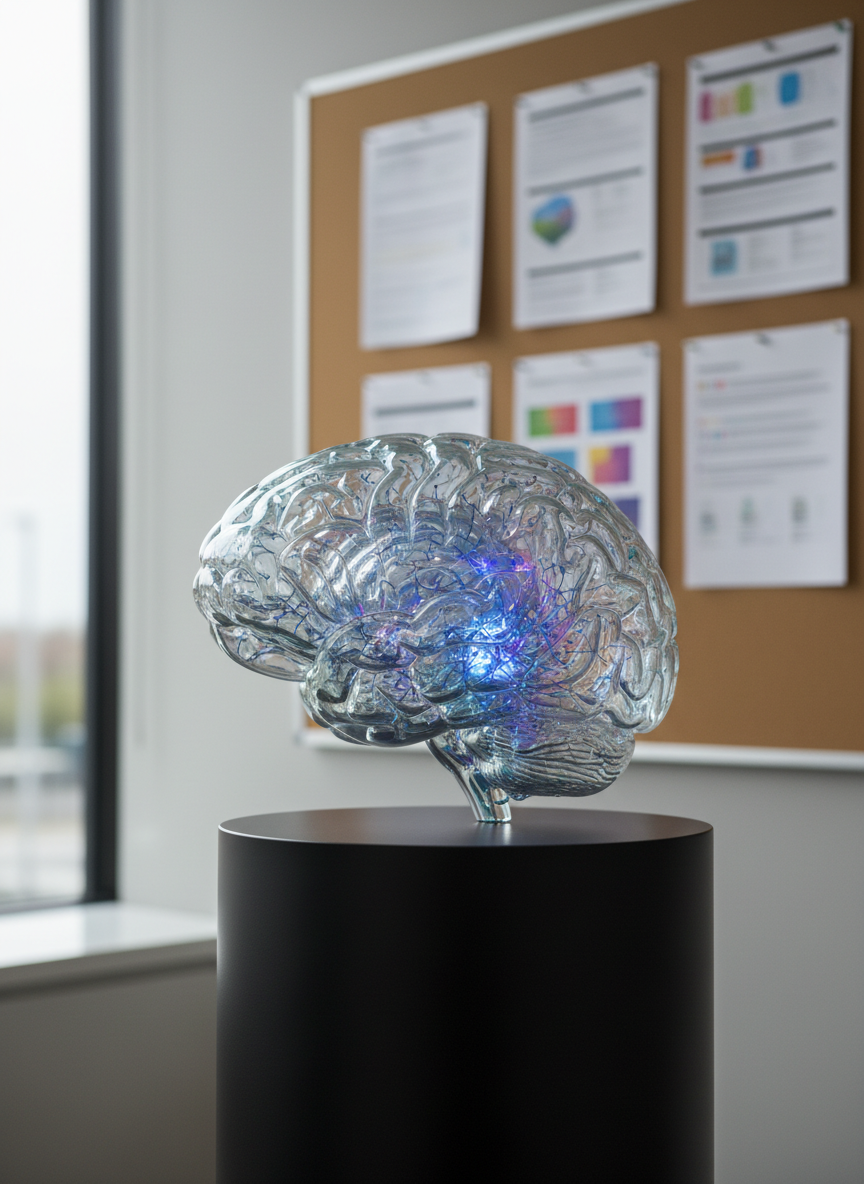
A close-up of a large, transparent glass brain sculpture resting on a matte black pedestal in a minimalist clinical office. Within the glass, subtle gradients of cool blues and purples trace intricate neural pathways, some glowing more intensely to suggest heightened emotional sensitivity. Behind the brain, a softly blurred corkboard holds color-coded, anonymous clinical diagrams and diagnostic criteria printed on white paper. Overcast window light filters in from the side, creating soft highlights and clean, professional shadows. Shot at slightly below eye-level in photographic realism, the composition uses the rule of thirds, with the glowing neural pathways drawing the eye. The mood is analytical yet compassionate, evoking careful study of borderline personality disorder in a modern, evidence-based setting, with no human figures present.

About Me

​​Hello everyone, my name is Anastasia Gonzalez, and I am currently enrolled in Walden University’s Clinical Psychology Ph.D. program. I am a first-year doctoral student with an anticipated graduation date of Winter 2029. I earned my master’s degree in Clinical Mental Health Counseling and hold a license in addiction counseling. Additionally, I am only a few months away from completing all requirements for licensure as a professional counselor.  

Professionally, I work both at a group practice and within my own private practice, which I established in September 2025. My clinical work focuses on supporting individuals experiencing a wide range of concerns, including personality disorders, obsessive-compulsive disorder (OCD), attention-deficit/hyperactivity disorder (ADHD), posttraumatic stress disorder (PTSD), generalized anxiety disorder (GAD), major depressive disorder (MDD), anger management difficulties, life transitions, women’s issues, identity and racial concerns, LGBTQ+ concerns, and religious trauma. I am passionate about providing compassionate, evidence-based care that recognizes the unique experiences and strengths of each client.                                                       

My practice has provided me with valuable opportunities to develop my clinical skills while serving diverse populations. In addition, working within a group practice has allowed me to collaborate closely with professionals from multiple disciplines. Our team includes therapists, medical assistants, psychiatric nurse practitioners, and psychiatrists, enabling us to provide comprehensive and coordinated care for our clients. 

One aspect of my work that I find particularly meaningful is involvement in treatment-resistant mental health care. Our group practice specializes in innovative approaches for individuals who have not responded adequately to traditional interventions. These services include Transcranial Magnetic Stimulation (TMS) and Spravato (esketamine) treatment, both of which have shown promise in addressing treatment-resistant depression and other complex mental health conditions.                            

I am excited to begin this doctoral journey and look forward to learning alongside all of you. I hope to gain new perspectives, deepen my understanding of clinical psychology, and contribute meaningfully to our discussions throughout the program.​ 

Articles

Explore key BPD topics

  • Understanding Borderline Personality Disorder

    For this blog series, I will focus on Borderline Personality Disorder (BPD), a complex mental health condition characterized by pervasive patterns of instability in emotions, interpersonal relationships, self-image, and behavior. Individuals with BPD often experience intense fears of abandonment, rapidly shifting moods, chronic feelings of emptiness, identity disturbance, impulsivity, and recurrent self-harming or suicidal behaviors. These symptoms can significantly impact daily functioning, relationships, and overall quality of life (American Psychiatric Association, 2022).

    I chose to focus on BPD because it represents a powerful example of how personality and individual differences influence mental health. As a counselor, I am interested in understanding the ways personality develops and how those patterns affect emotional regulation, relationships, and coping strategies. BPD is particularly relevant because the disorder is often misunderstood and stigmatized despite the significant emotional pain many individuals experience. Learning more about BPD can help clinicians move beyond stereotypes and better understand the unique experiences of each person diagnosed with the disorder (American Psychiatric Association, 2022).

    One aspect of BPD that I find especially important is that no two individuals present exactly the same way. While some individuals may struggle primarily with fears of abandonment and unstable relationships, others may experience greater challenges with impulsivity, identity disturbance, or emotional regulation. These differences highlight why it is essential to consider personality and individual factors when developing treatment plans. Understanding a person’s strengths, coping skills, and life experiences can provide valuable insight into how symptoms develop and are maintained (American Psychiatric Association, 2022).

    Current research emphasizes the importance of individualized, evidence-based treatment for BPD. The American Psychiatric Association’s practice guideline identifies psychotherapy as the primary treatment approach and recommends interventions that target emotional regulation, interpersonal functioning, and identity development (Keepers et al., 2024). What I find encouraging is that the research also demonstrates that recovery is possible. Although BPD has historically been viewed as difficult to treat, many individuals experience meaningful improvement when they receive appropriate support and treatment (American Psychiatric Association, 2022; Keepers et al., 2024).

    As this blog progresses, I hope to explore how personality theories, resilience factors, and evidence-based interventions contribute to a deeper understanding of BPD. I am particularly interested in examining how individual differences shape both the development of symptoms and the therapeutic process, as this knowledge can help clinicians provide more effective and compassionate care.

    References:

    American Psychiatric Association. 2022. Diagnostic and Statistical Manual of Mental Disorders, Fifth Edition, Text Revision (DSM-5-TR). American Psychiatric Association Publishing.

    ​​Keepers, G. A., Fochtmann, L. J., Moran, M. E., Gelenberg, A. J., Benjamin, S., Champine, R. B., Hoeppner, B. B., Lazarus, A., Markowitz, J. C., & Zisook, S. (2024). The American Psychiatric Association practice guideline for the treatment of patients with borderline personality disorder. American Journal of Psychiatry, 181(11). https://doi.org/10.1176/appi.ajp.24181010​